














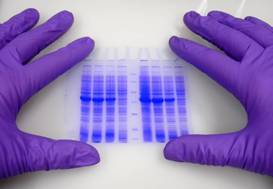
 The rate of innovation in biotechnology (and its offshoot agrotech) has increased dramatically as a result of the advent of laboratory automation and genomic-characterization techniques. The automation paradigm coupled with microfabrication and microfluidic manufacturing technology has ushered in multi-fold increases in the rate of candidate screening and the ability to perform massively-parallel gene discovery and gene-expression monitoring. This has resulted in a highly-competitive arena in which research teams are developing sophisticated schema and formulations for disease diagnosis and treatment, as well as commercially-viable biosensors.
The area of biologics is also developing rapidly. Biologics are typically classified separately from chemically-derived drugs based on the two main attributes that biologics are only produced by living systems, and are relatively large molecules, with an intrinsically heterogeneous structure that can contain hundreds of amino acids. The delicate nature of biological macromolecules and the sensitivity of the living cells that produce biologics impart complex manufacturing requirements for fermentation, aseptic processing, storage, and testing. Biologics have been developed using genomics, proteomics, microarray, cell culture, and monoclonal antibody (mAb) technologies. Biologics have accelerated target identification with new genetic information and better understanding of subcellular cascades and disease processes.
At the same time, investors in biotechnology ventures remain risk-averse. The substantial capital investment for R&D, combined with the unpredictable and arduous regulatory approval process, remains a difficult hurdle for obtaining adequate funding. Investors are paying careful attention to intellectual property during the due-diligence stage. Risk assessment relies heavily on the strength of the IP at hand to reduce exposure. In many cases, a biotech startup depends essentially on the IP that the founders can bring to the venture.
As a result, the upfront strategy that needs to go into the various decisions associated with obtaining IP rights is substantial, given its core role in the biotechnology industry. To recoup investments, a considerable amount of market exclusivity is a requisite. Yet, third-party IP can create roadblocks with regard to freedom to operate. Hence, issues with royalty stacking, problems with patent thickets, and solutions involving patent pools emerge from the terrain of the biotech IP field. This is further exacerbated by shortened patent lifecycles due to the time involved to reach a market; such shortening is only partly compensated for by patent-term extensions. FlashPoint IP has initiated its own platform to mitigate these issues. Learn about FlashPoint IP’s BioPALETTE initiative.
This sets a formidable threshold for obtaining high-value patents in the Biological Arts. The trend of “evergreening” patents (in which incremental changes to formulations, dosage regimes, and administration protocols are secured in follow-on patents) is a response to the elevated industry benchmark. However, such approaches may not meet the requirements for patentability in such a congested environment.
FlashPoint IP factors these wide-ranging aspects into the process of securing patent protection, whether in searching the prior art, drafting patent applications, selecting how and where to file, or prosecuting your claims to an invention to help you maximize value in an extensive array of practice areas. Our patent attorneys are adept at synthesizing the many facets needed to create a winning formula for your IP. Contact us to discuss your options regarding IP positioning and strategy, and how best to secure your rights.






